By Freddie Sankey · Founder of Jove Club
What training I actually do
The question I get asked on every trip. Injuries first, then aerobic work, then getting really, really strong. Simple, but there's a lot of it.
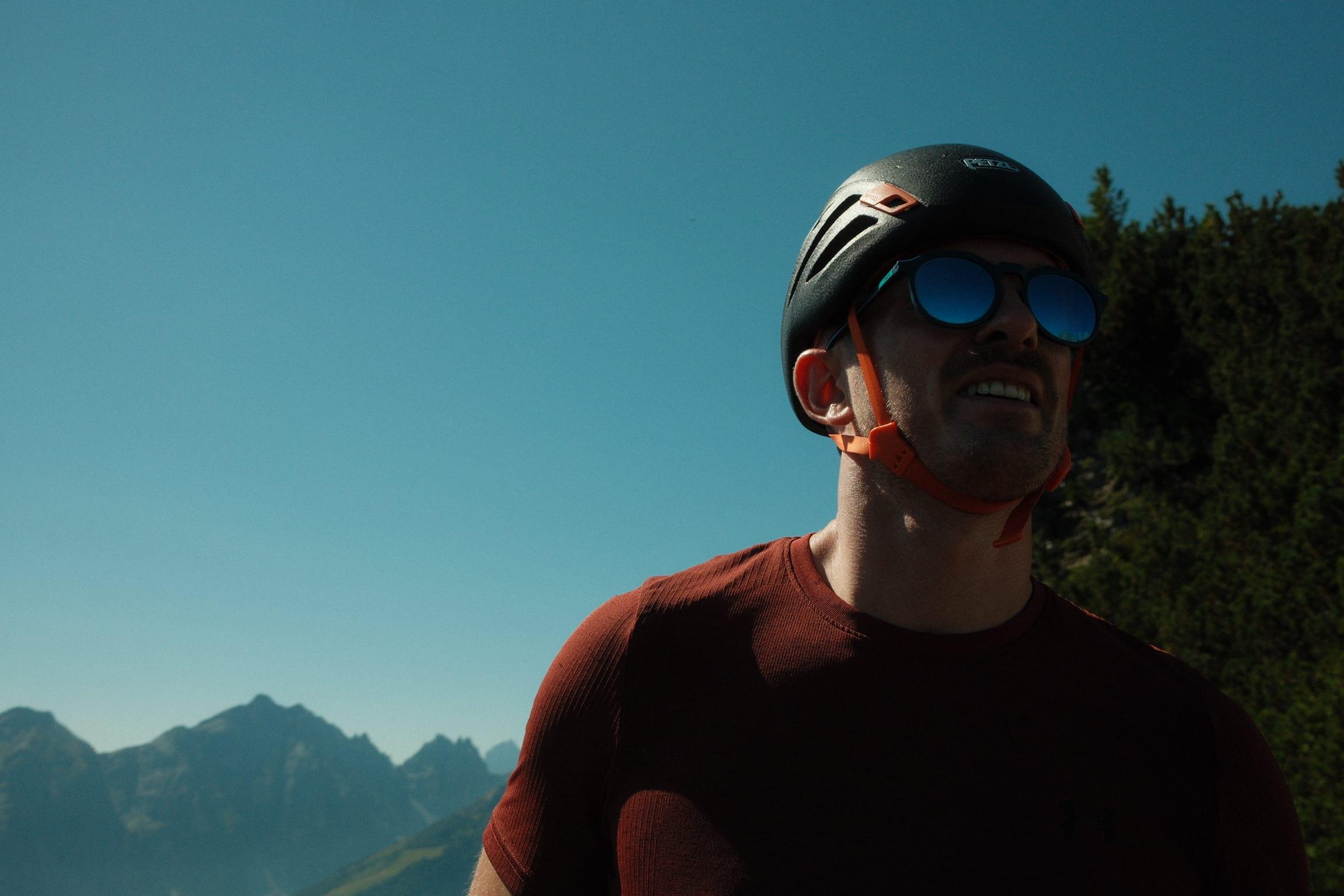
Every time I go away on a trip, a question people always ask me is what training I do.
I generally don't talk about it unless people ask me - I'd rather focus on what Jove people are doing! But I can understand why people are interested.
I practise what Jove Club preaches. I'm not pushing our fitness philosophies on people and then doing something completely different which can be the way with many folk...
Aside from the health/longevity benefits and of course the requirement for me to be fit to do my job, I see fitness as a facilitator. The fitter I am, the less restricted I am and the more things I can experience.
My calendar next year is almost all Jove Club and so that means I need to be fit to climb mountains in the winter, take on a variety of challenges including the charity one in April, and of course be ready for the extreme trips to the Highlands and abroad (TBC!). On top of all that, I'd love to enter some races too.
When I think of these demanding events, there is only one goal to govern how I train, and this is to be fit enough to do whatever I want, whenever I want without EVER having to worry.
Thankfully training for all the above is actually incredibly simple. I look at the hardest events and let everything else fall into line behind them. There is a huge amount of crossover between all of them.
So what do I actually do?
Injuries
First things first - fix and prevent injuries. I've been dogged by a bulging and split disc in my lower back for years. This has led to an array of smaller injuries downstream with knee pain, hip issues and more.
These have stopped me from any serious running for over a year now and likewise with an array of lifts like squats and deadlifts. I've hated not being able to do these things. I love chasing faster running times and heavier lifts but what I love more is being able to live a life full of adventure and variety.
I've put my body through a lot over the last 20+ years of training so understanding where and how I get injuries/niggles along with how to manage them is essential.
Aerobic training
Next comes aerobic training. Provided I've done enough rehab sessions (which are essentially core, glute and hamstring focussed) my next priority is aerobic work.
Normally this would take the form of running - it's by far the most accessible way to train. You don't need expensive kit, you can pretty much do it anywhere, anytime, you can focus it around races and importantly, it's outdoors!
To sustain long days in the mountains and beyond, I need serious aerobic capacity. I'm asking my body to move at a steady state for hours and even days, sometimes carrying a heavy pack.
If you think a few gym classes and some strength training will compensate for a lack of aerobic fitness - it won't. It's as simple as that. Most people, like me, live in a city and so we're already at a disadvantage.
If I'm able to run, I'll do 4 or 5 runs per week. This is usually 1 or 2 easy runs, 1 or 2 speed/tempo sessions and 1 long run increasing distance each week. As I can't run like that currently, I do 3 or 4 hours of aerobic training in the gym mostly on the watt bike or maybe carrying a sandbag on an incline treadmill.
To get the longer days, I ensure I do big days out. Many of these now come naturally with Jove Club related stuff (trips, recess etc.). If I can't do that, then I'll find a local hike and get a few hours into my body.
Strength training
To support all of the above, I focus on getting really, really strong. My strength training is really boring in many ways. I do 2 or 3 sessions per week which are generally an hour long. I do them as whole body workouts with 48-72 hours rest between each one.
I don't waste any time in the gym - my whole session is run in supersets meaning I do one exercise e.g. pull ups and something else in my 'rest' e.g. glute bridges. Almost all the rehab from my physio is the same kind of thing I'd do anyway.
Think glutes, hamstrings, some plyometric work and core as the priority with everything else layered on top. I go heavy. I note my weights and reps and try to lift more each week! If your goal is to get stronger then you need to try and get stronger.
90% of my training is with a few kettlebells, a couple of dumbbells and bodyweight. I hardly ever use a barbell even and don't use any machines. I'm certainly not discouraging people from those things - I just hardly ever use them.
If I get time and I'm free of injury (remember that's always number 1 priority) I'll add some power work. This is great for translating some of the strength gains into speed gains on a mountain.
That's it - it's all really simple but there is a lot of it. A good week is 6-7 hours of training and more when I can do long runs again. Some weeks I simply don't get the time to do more than 3-4 hours of training - but that's okay, it's consistency over the long term that counts.
I don't waste time with random classes. Every session is precious and counts towards my overall fitness in a way that a random session wouldn't. I also don't waste time with advanced movements that need me to spend half the session learning how to do them.
What about getting a good physique?
I don't train with physique in mind - I focus on performance and let that be a side effect. If you're lifting weights and eating well, that will come. Years of experience is knowing that it doesn't really matter what you do in the gym when it comes to physique (unless you're a bodybuilder...) - it's all about what you put in your mouth.
You don't need to train for 7+ hours per week... But if you want to get fit for adventure, you need to start training with purpose. Most people drift from fad to fad - a class here, a run there and get nowhere.
Give yourself some goals - and when I say goals, real tangible goals you cannot defer. A race, a trip, a challenge.
I mean it when I say I want people to get more out of life through adventure. Training is a key component.
We're starting the year off with a training camp focussed on helping you understand what it means to train for adventures big and small. We'll be out in the Peak District doing some practical stuff along with plenty of chat about how to plan your training going forward.
It's going to be an epic start to the year.
Jove Club
Adventure Fitness Camp
Peak District, 8 to 10 January 2027. Practical sessions outside and a plan for your training year.
See the camp
Freddie Sankey
Founder of Jove Club
Freddie founded Jove Club after six years as a Royal Marines officer and six more in finance. He's a qualified outdoor instructor and running coach, guides many of the Jove trips himself, and trains with the group in London every week. In his spare time he's drawn to mountaineering, physical challenges and multi-day adventures.
More about Freddie →Keep reading
More from the journal
Ready for the real thing?
See what trips are coming up.
Guided by qualified instructors. Small groups. All abilities.
Browse trips