By Freddie Sankey · Founder of Jove Club
A Sensible Guide to the National Three Peaks
What the challenge involves, routes, drive times, fatigue, and environmental impact, so you can decide whether it's right for you.
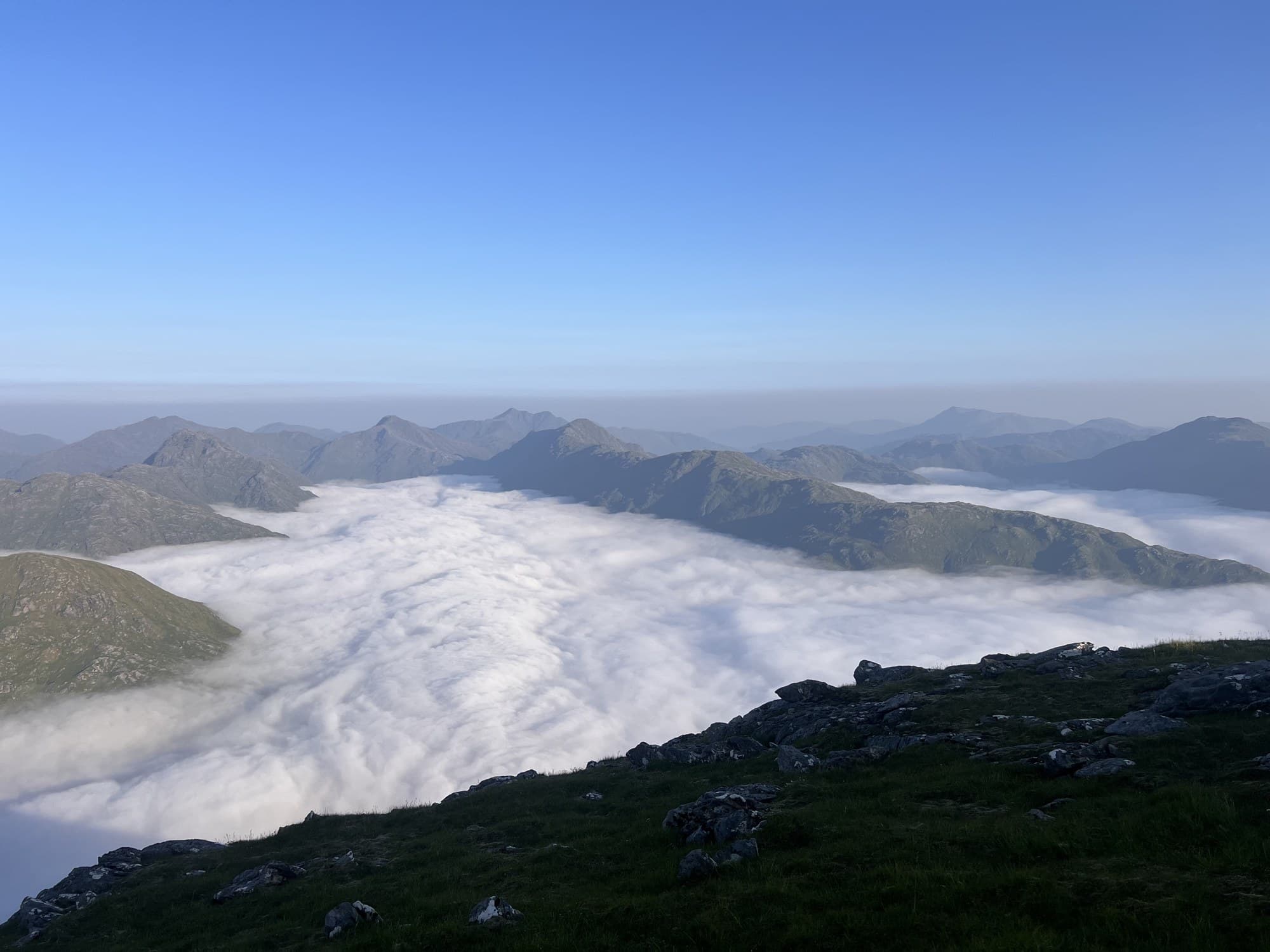
The National Three Peaks challenge: Ben Nevis, Scafell Pike, and Snowdon, completed within 24 hours, is one of the most popular outdoor challenges in the UK. Every summer, thousands of people attempt it. Outdoor charities raise millions through it. It has a permanent place in the British adventure calendar.
It's also a challenge that generates more questions than most. Is it a genuine mountain experience? Is it safe? Is it worth it? What does it actually involve?
We're going to answer those questions honestly, and give you everything you need to decide whether it's right for you.
What it is
The National Three Peaks is primarily a logistics challenge. The three mountains themselves, while the highest in their respective countries, have well-marked, well-maintained routes that are genuinely accessible to fit beginners.
The difficulty is not the climbing. It's the driving: Ben Nevis to Scafell Pike is around three hours, Scafell Pike to Snowdon is around three hours more. You're looking at roughly 460 miles of driving sandwiched between mountain ascents, with most of it happening overnight.
Total time on the hills: 8-10 hours. Total time including drives: 22-24 hours. This means you're awake, moving, and decision-making for the better part of a full day and night.
The routes
Ben Nevis (1,345m), Scotland
The tourist path (Mountain Track) from Glen Nevis is the standard route. Well-marked, no scrambling required, serious ascent (1,340m over 10km return). Expect 4-6 hours depending on pace and conditions. Weather on Ben Nevis can be severe even in summer, wind, cloud, and cold are common at the summit regardless of what it looks like below.
Scafell Pike (978m), England
The standard route from Wasdale Head is the most direct and least crowded. Alternatively, the Borrowdale approach from Seathwaite adds distance but more scenic interest. 4-5 hours return. The summit plateau is rocky and navigation can be tricky in poor visibility.
Snowdon / Yr Wyddfa (1,085m), Wales
The Llanberis Path is the most used for Three Peaks attempts, clear, well-marked, and manageable even when tired. Pen-y-Pass routes (Pyg Track, Miners' Track) are more scenic but add complexity at the end of a long day. 4-5 hours return.
The risks
Three risks stand out above everything else:
1. Driving tired
This is the single biggest danger of the Three Peaks challenge. Driving after 16+ hours awake is comparable to driving over the legal alcohol limit. Multiple fatalities associated with Three Peaks challenges have occurred on the roads, not the mountains.
The non-negotiable: have a dedicated driver who does not summit the mountains. They stay in the vehicle, rest where possible, and take responsibility for getting the group between peaks safely. If you don't have this, don't attempt the 24-hour format.
2. Schedule pressure
The 24-hour time limit creates a particular psychological pressure to push on regardless of conditions or how the group is feeling. On a mountain, this is how people get into trouble. Set realistic checkpoints and agree in advance that the challenge can be extended to 36 or 48 hours if needed, or abandoned if conditions or safety demand it.
3. Sleep deprivation
Decision-making degrades significantly after 20+ hours awake. Blisters go unaddressed, navigation errors go uncorrected, risk assessment becomes unreliable. The person in the group with the most mountain experience needs to be aware of this and actively compensate for it in the others.
What you need
- •At least one person with solid mountain experience and navigation capability
- •A dedicated driver who is not summiting, this is not optional
- •Headtorch with spare batteries (you will be in the dark)
- •Powerbank, phones are your navigation backup and you'll be using them for 24 hours
- •Emergency blanket, first aid kit, map and compass for each mountain
- •More food than you think, your appetite may disappear but your body still needs calories
- •A realistic schedule with buffer time built in
The environmental question
The popularity of the Three Peaks creates real problems on the paths and in the communities around the mountains. Large commercial groups, sometimes 50+ people, cause significant erosion on already heavily-used paths. Parking in small villages overwhelms local infrastructure.
If you're doing it commercially or in a large group, consider how you're contributing to this. Small groups, independent organisation, off-peak timing, and leaving no trace all reduce the impact.
Is it worth it?
That depends what you're after.
If you want three brilliant mountain days, time to appreciate each summit, to move at a pace that lets you actually experience the terrain, to sleep between mountains and feel the difference between Scotland and Wales, then the 24-hour format probably isn't it. A long weekend doing all three properly will be a more rewarding experience.
If you want a specific logistical and endurance challenge that tests your ability to keep moving under sleep deprivation, with a hard 24-hour constraint, then the Three Peaks delivers that. It's a legitimate challenge. It just requires honest preparation and a clear-eyed view of the risks.
“We don't run the National Three Peaks as a guided Jove Club trip. Not because we think it's without merit, but because we think a week in the Scottish Highlands gives you something the 24-hour challenge can't. You're welcome to disagree.”
Whatever you decide: go prepared, go with people you trust, and don't let anyone drive tired.
Jove Club
What we run instead.
Jove Club's guided trips are built around great mountain days, not overnight drives. See what's coming up.
Browse trips
Freddie Sankey
Founder of Jove Club
Freddie founded Jove Club after six years as a Royal Marines officer and six more in finance. He's a qualified outdoor instructor and running coach, guides many of the Jove trips himself, and trains with the group in London every week. In his spare time he's drawn to mountaineering, physical challenges and multi-day adventures.
More about Freddie →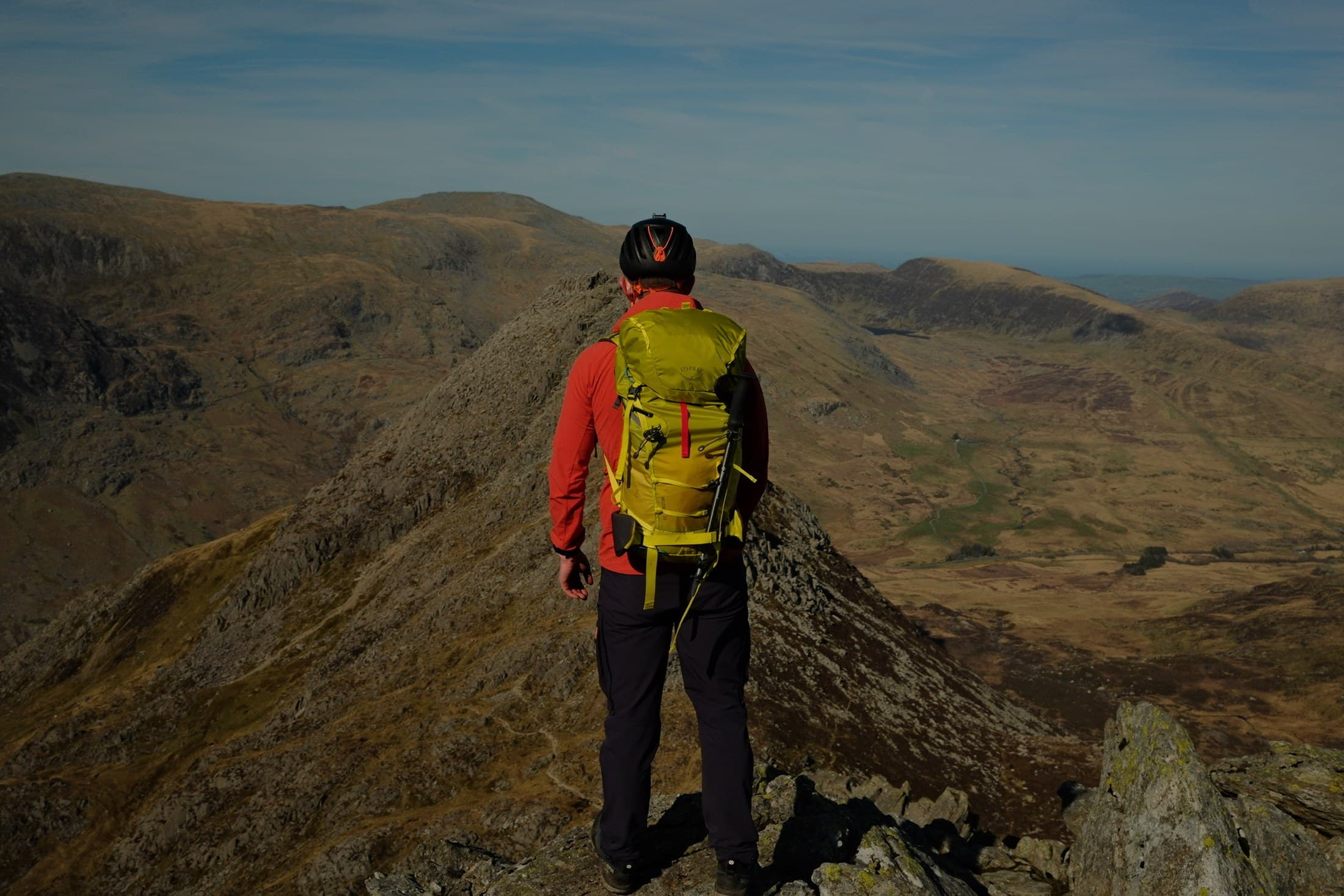
Ready for the real thing?
See what trips are coming up.
Guided by qualified instructors. Small groups. All abilities.
Browse trips